
If you have already visited Albania you already know what I am talking about “the Albanian coffee ritual” and if you are going to visit Albania it is better to know a little bit about the deep connection that Albanians have with coffee culture.
600 Year Old Coffee Culture: An Albanian Love Story
If you have already visited Albania, you already know what I am talking about: the Albanian coffee ritual. And if you are going to visit Albania, it is better to know a little bit about the deep connection that Albanians have with coffee culture.
Introduction
Since I was a child, I noticed how in our country a lot of daily habits and rituals involve the preparing and drinking of coffee. I have a vivid memory of my grandmother when she hosted guests for their afternoon meeting and the ritual of preparing Turkish coffee. I myself got involved, since often she would ask me to help her grind the coffee beans previously baked by her with a little oriental-style coffee grinder we had at home.
Journey of the Coffee Bean
Coffee culture and history is a fascinating journey that started in Ethiopia and spread across the world. It has changed not only humans but also the shape of the planet in order to keep up with its needs. Let's be honest with ourselves: coffee is an addiction.
Let's start this exploration of how and when the coffee bean reached Albania. It started in Ethiopia and Yemen, where this mysterious beverage was made from a plant that locals were cultivating, baking, and boiling. Gradually, this drink made its way to other Arab lands and North Africa. Turkish merchants were quick to understand the potential of this drink and brought it to Istanbul, where the first coffee shops in Europe were opened in the late 15th century, called Kiva Han. The coffee culture took roots.
By the end of the 15th century, Albanian lands would be annexed by the Ottomans, and many Albanian merchants who traveled to Istanbul ventured into opening coffee shops in their hometowns.
Coffee in Albania
The Turkish traveler and explorer Elviya Celebi stated that during his travels in modern-day Albania and Kosovo between 1660 and 1670, all the taverns, hotels, and houses he visited served coffee among other drinks. In 1725, an Albanian poet from Berat called Muci Zade, surely another coffee-addicted person, wrote poetry about the coffee culture and Albanian coffee ritual.
"Coffee is the glue that holds Albanian society together — a sacred pause in the rhythm of the day."
How Albanians Brought Coffee to the Rest of Europe
Albanian merchants sailed from the Ottoman Empire ports to the western European ports, trading the coffee bean there, especially in Venice, where the first coffee shop was opened around 1645.
The Curious Case of Pashk Rosi
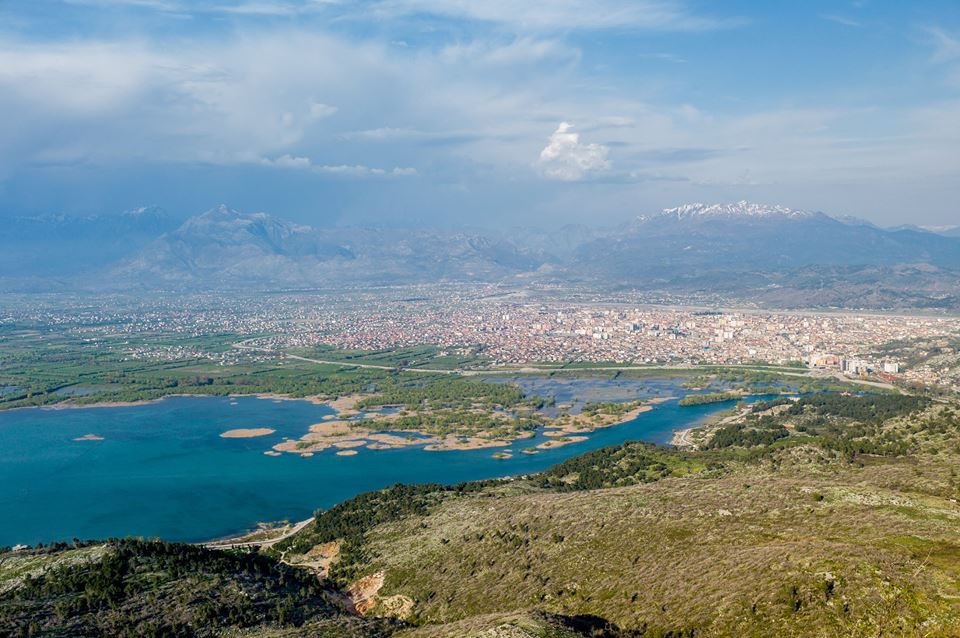
Pashk Rosi was an Albanian born in Tuz, a town near Shkodra Lake. He was a merchant who lived for many years in Istanbul and found himself a business partner, an English man named William Oldys. In 1653, Pashk Rosi opened the first coffee house in the London center, following the Istanbul-style coffee shop. In the beginning, Londoners were afraid of this mystical Muslim dark drink that could make you change religion, despite the fact that Pashk was himself Christian. In the end, he had to write a solemn oath and place it in the coffee shop stating that by "drinking coffee you will not be subject to changing religion." Twenty years later, in 1670, Pashk Rosi decided to expand his franchise in Paris. This time, his coffee shop was immediately a success. The coffee culture and history is full of stories such as Pashk's.
☕ Quick Fact: Pashk Rosi's Oath
To calm Londoners' fears, Pashk Rosi posted a solemn oath in his coffee shop: "By drinking coffee you will not be subject to changing religion." It worked — and coffee conquered London.
How Kara Mustafa Pasha Kopruli Conquered Vienna
For those that don't know it, Kara Mustafa failed to conquer Vienna, and because of his failure, he lost his head. But we are bringing a different story! When the Grand Vizier of the Ottoman Empire Mustafa Pasha (an adopted member of the Albanian noble house of Kopruli) was planning the siege of Vienna, he ordered that thousands of coffee bean sacks be brought with the army as part of the inventory. The request surprised many officers and quartermasters of the army, since the quantity was a tremendous amount of coffee. The Grand Vizier knew the road would be long, and he needed his soldiers in high spirits during this campaign.
The Ottomans were defeated by the Polish cavalry outside Vienna after months of siege, and they retreated in a chaotic order and left behind 500 sacks of coffee beans. The Austrian officers were scared of these beans, thinking of them as a sort of gunpowder. But a Polish merchant named Franz Georg Kolschitzk knew about the coffee beans, calmed the Austrian officers, claimed them, and used them to open the first coffee house in Vienna. His defeat at the gates of Vienna cost Mustafa Pasha his head, but the coffee he brought with him conquered the city in a different way.
"Mustafa Pasha lost his head at the gates of Vienna, but the coffee he brought with him conquered the city in a different way."
☕ Experience Albanian Coffee Culture with Kiri Adventures
Want to taste this 600-year-old tradition for yourself? Join our Shkodër Coffee Walk — a guided tour through the city's oldest coffee houses, where you'll learn the art of Turkish coffee preparation, hear local stories, and sip like an Albanian.
Explore the Coffee Walk →Gallery